

January Is a Season, Not a Command
Every year, something strange happens in January.
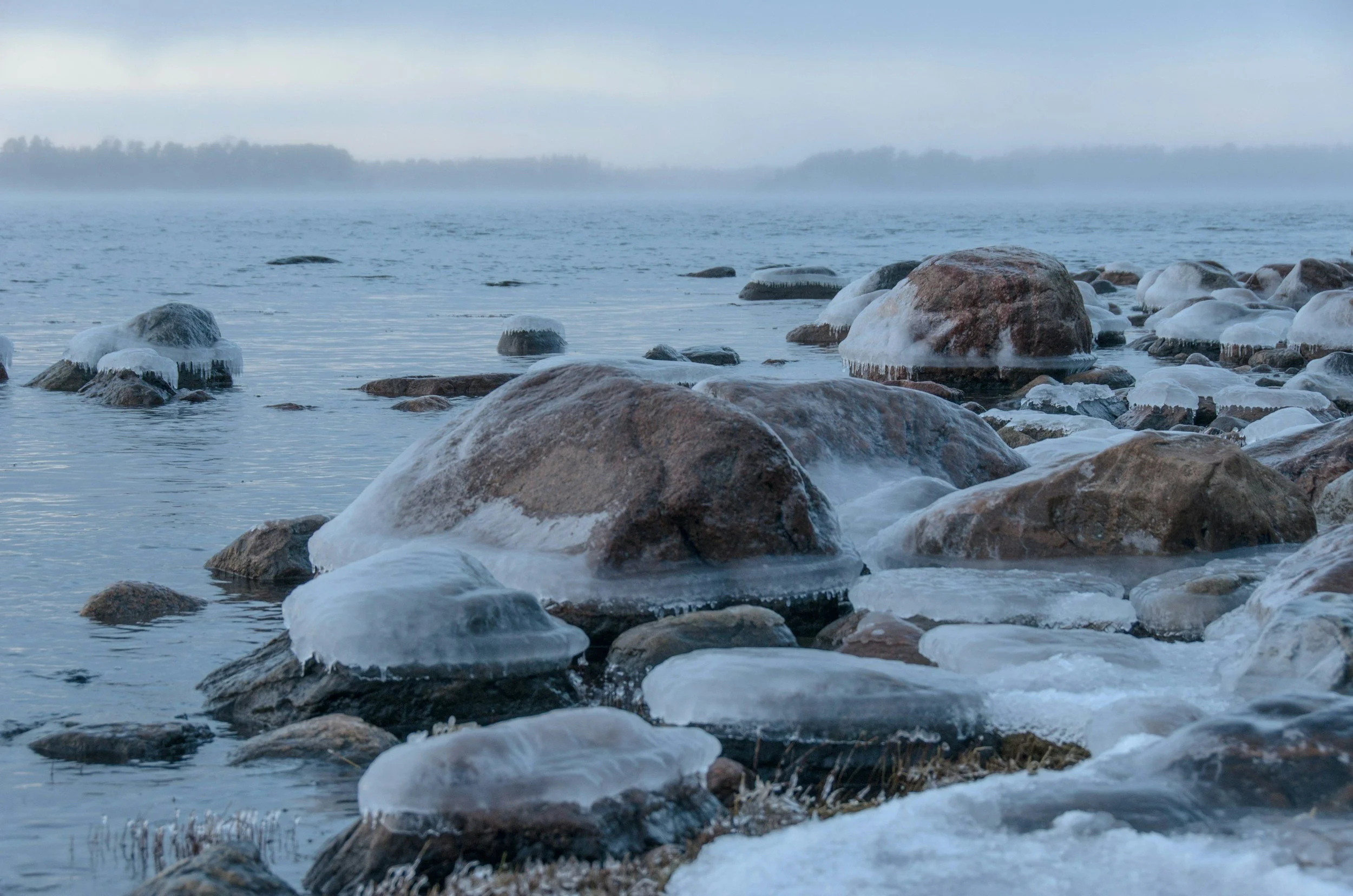
The light is low. The land is dormant. The natural world has withdrawn into conservation and repair.
And yet human beings are expected to do the opposite.
We are told—subtly and relentlessly—that this is the moment to initiate. To generate energy. To jump-start vitality. To begin again through force of will alone. New habits. New commitments. New versions of ourselves.
But the human psyche is not separate from nature. It is an expression of it.
We participate in cycles whether we acknowledge them or not. And when those cycles are ignored—when dormancy is treated as pathology and conservation as failure—the psyche responds in predictable ways.
Motivation collapses. Mood dims. Presence thins. Numbing, dissociation, and compulsive stimulation quietly take over.
These are not moral failures. They are adaptive responses to an unreasonable demand: Be alive as if it were spring, when everything in you knows it is winter.
January asks something very different of us than what we are usually told.
Not ignition, but containment. Not expansion, but endurance. Not performance, but patience.
Our culture struggles mightily with this truth. Productivity narratives do not pause for seasons. Vitality is treated as something that should be instantly accessible, as if the psyche were a machine that can be jump-started on command.
Living systems do not work that way.
They rest. They prune. They conserve. They wait.
When we refuse this reality, the cost shows up everywhere—in our bodies, in our moods, in our relationships, and in the ways we talk about growth, healing, and self-improvement.
This includes psychotherapy, which is not immune to cultural pressure. January is often framed as the time to “finally begin,” to commit, to make changes—as though readiness obeyed the calendar. For some people, that timing aligns. For many others, it quietly deepens shame.
But this problem extends far beyond therapy.
It appears wherever people are asked to manufacture vitality in defiance of season—in work, in self-help, in spiritual practice, in personal ambition. Wherever winter is treated as a defect rather than a phase, people learn to turn on themselves for obeying reality instead of slogans.
The refusal to initiate in January is not laziness. It is not avoidance. It is often seasonal intelligence.
There is a difference between stagnation and dormancy. Dormancy is alive—but turned inward, conserving what matters so that something real can emerge later.
So if January is not for beginning, what is it for?
Not nothing. But not what we’ve been told.
The task of January is not to begin. It is to endure without self-contempt.
That means resisting the reflex to interpret low energy, diminished motivation, or inwardness as personal failure. It means refusing to turn the natural slowing of life into a moral indictment.
Practically, this can look like:
Keeping the ember alive.
Not expanding, optimizing, or reinventing yourself—but maintaining one or two small sources of warmth and meaning. A daily walk. A familiar book. A brief creative practice that doesn’t have to go anywhere. Something that quietly says: I am still here.
Choosing conservation over acceleration.
Eating regularly. Sleeping as well as you can. Attending to the body without trying to transform it. Letting “enough” be enough. Conservation is not stagnation; it is preparation.
Resisting the lie that rest is failure.
Rest is not what you do when you’ve earned it. In winter, rest is part of the work. The psyche, like the land, needs periods of withdrawal to metabolize what has already happened. Pushing through this process does not make you stronger—it makes you brittle.
Honoring the season you are actually in.
This may be the hardest task of all. It requires telling the truth about what is and refusing to perform vitality for the sake of appearances. It means allowing your inner life to be quieter, slower, and less impressive than it was a month ago—without turning on yourself for it.
None of this is glamorous. None of it photographs well. But it is how living systems survive winter intact.
January does not ask you to become someone new. It asks you to remain yourself without cruelty.
If you can do that—if you can carry yourself through this season with a little less self-attack and a little more patience—you will have done more than any resolution could promise.
Spring does not need to be forced. It arrives when the conditions are right.
Your only responsibility in January is to stay alive to yourself while you wait.
Author’s Note
This article was developed with the assistance of ChatGPT, an artificial intelligence tool used to support brainstorming, writing, and editing. The ideas, perspectives, and conclusions expressed here are my own, and I take full responsibility for the published content.