

Tarot-Assisted Psychotherapy: An Introduction and an Illustrative Three-Card Spread
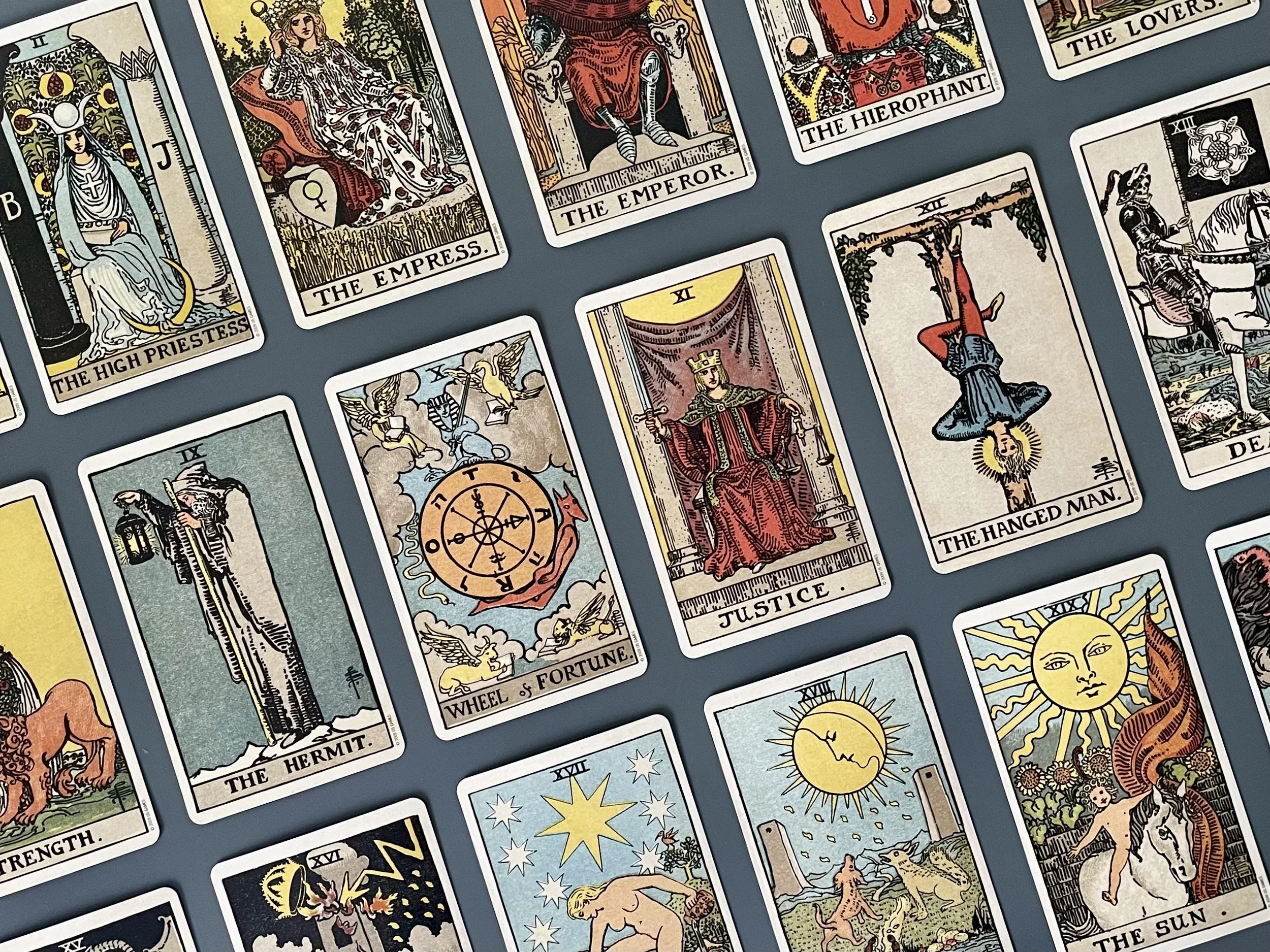
The procession of trumps as represented in the Centennial Edition of the Smith-Waite Tarot deck published by U.S. Games Systems.
I’ll be the first to admit that Tarot has a tawdry, unsavory reputation. Tarot has long been associated in the public imagination with practices and beliefs often regarded as dubious, including fortune-telling, divination, prognostication, charlatanism, superstition and occultism. Making matters worse, historically unfounded claims about Tarot have been repeated for centuries—even by authors seeking to sophisticate the tradition (Farley, 2009/2019, pp. 169–170; Greer, 2019, pp. xi–xii). And despite the fact that Tarot has acquired a newfound cachet in certain online forums and communities, it still seems, at least anecdotally, to retain a largely predictive and prescriptive mandate and, more often than not, an accompanying “woo,” “witchy,” or gothic aesthetic variously composed of crystals, weathered wood, dried lavender sprigs, and raven feathers. (To be clear, there is nothing inherently wrong with any of these aesthetic adornments. After all, who could find fault with a lavender sprig? I enjoy this sort of content myself, often as little more than entertainment. My concern is not that Tarot must always be approached solemnly, but that its increasingly familiar presentation as an aesthetic or lifestyle accessory can obscure the depth and richness of its symbolism.) It is onto this bizarre and confusing landscape that I step (not unlike Tarot’s own Fool) to argue, as clinicians and scholars have done before me (Blume, 2025; Rosengarten, 2000; Semetsky, 2005, 2006), that Tarot contains therapeutic potential too promising to ignore.
Tarot: A Historical Perspective
But first, what exactly is Tarot? Where did it come from, and why?
Tarot originated in fifteenth-century northern Italy, where its principal early use was as a card game, particularly among the aristocracy (Decker et al., 1996, pp. 27–28, 31–32, 40–42; Farley, 2009/2019, pp. 33–49). Its trump imagery was symbolic from the beginning, drawing upon allegorical figures and themes recognizable within Renaissance Italian culture (Decker et al., 1996, pp. 33, 43–47). Although there is no conclusive historical evidence that Tarot was originally devised for divination or other occult purposes, the possibility that its imagery carried esoteric significance from the outset cannot, strictly speaking, be excluded (Decker et al., 1996, pp. 28–29, 33–34). Beyond ordinary card play, Tarot imagery also found occasional applications in the characterization of individuals. Sixteenth-century Italian recreational practices included the assignment of Tarot trumps to individuals for poetic characterization, as well as a possible, though poorly documented, application of the cards to character delineation (Decker et al., 1996, pp. 32–33). These practices did not constitute Tarot readings in the modern sense, nor is there evidence that they depended upon esoteric interpretations of the cards. Nevertheless, they suggest that Tarot imagery could be employed to characterize individuals independently of the divinatory and occult systems that would develop around the cards in later centuries.
Playing cards had reached Europe from the Islamic world during the second half of the fourteenth century, in packs of 52 cards comprising four suits, each with ten numbered cards and three court cards (Decker et al., 1996, p. 29). The suit signs of Tarot—Cups, Coins, Swords, and Batons—were those of ordinary Italian playing cards, then and now (Decker et al., 1996, pp. 25, 29). The familiar suits of Hearts, Diamonds, Spades, and Clubs, by contrast, were introduced by French cardmakers around 1470, several decades after Tarot first appeared (Decker et al., 1996, p. 30). Tarot's defining innovation was the addition of 22 pictorial cards—the Fool and 21 numbered trumps—to the existing playing-card structure (Decker et al., 1996, pp. 25, 31). It also incorporated a fourth court figure: surprisingly, it was the Queen, rather than the Knight, who was added to the traditional Italian court of King, Knight, and Jack (Decker et al., 1996, p. 31).
A conventional Tarot deck, then, contains 78 cards, divided into 22 pictorial cards and 56 suit cards (Decker et al., 1996, p. 25). These two groups were subsequently dubbed the Major Arcana and Minor Arcana, respectively, within the occult tradition (Decker et al., 1996, p. 38). The Major Arcana portray recognizable figures, situations, and symbolic themes—including the Fool, the Magician, the High Priestess, Strength, the Lovers, the Devil, and the Tower—while the Minor Arcana comprise four suits, commonly Wands, Cups, Swords, and Pentacles in modern esoteric decks. Each suit contains ten numbered cards and four court cards: Page, Knight, Queen, and King. Although the Fool invites comparison with the Joker of modern playing-card decks, the two have no historical connection (Decker et al., 1996, p. 25).
The modern occult tradition surrounding Tarot emerged in France during the final decades of the eighteenth century, amid a flourishing interest in secret societies, esoteric doctrines, and the supposedly ancient wisdom of Egypt. This fascination with Egyptian antiquity, known as Egyptomania, found expression in elaborate rituals, mystical fraternities, and claims to the recovery of long-forgotten knowledge (Decker et al., 1996, pp. x–xi, 20–21). At the same time, Tarot had become virtually unknown as a card game in Paris and much of central and western France, where its unfamiliar imagery could readily invite speculation about hidden meanings (Decker et al., 1996, pp. xi, 59). It was in this cultural atmosphere that the Protestant pastor and scholar Antoine Court de Gébelin (d. 1784) attributed ancient Egyptian origins and esoteric significance to the cards, helping establish the foundations of occult Tarot (Decker et al., 1996, pp. 52–73; Farley, 2009/2019, pp. 93–120). Court de Gébelin even proposed an Egyptian etymology for the word Tarot, deriving it from words he believed meant “road” and “royal,” although Egyptian hieroglyphs had yet to be deciphered, a breakthrough that would not occur until 1822 (Decker et al., 1996, p. 60; Farley, 2009/2019, p. 20). Alongside the Egyptian origin myth arose the competing claim that Tarot originated among the Roma (historically and pejoratively called “gypsies,” a term derived from “Egyptian” and reflecting the mistaken belief that the Roma originated in Egypt) (Decker et al., 1996, pp. 65, 228–233; Farley, 2009/2019, pp. 22–26). Although historically intertwined, these accounts were not necessarily compatible, and neither is supported by Tarot's documented history. Nevertheless, both have proven remarkably tenacious and widespread (Decker et al., 1996, p. 27).
The occult tradition remained largely confined to France until the latter decades of the nineteenth century, when it began crossing the English Channel and spreading throughout the English-speaking world (Decker et al., 1996, pp. x–xi, 35; Decker & Dummett, 2002/2025, pp. 43–58; Farley, 2009/2019, pp. 121–150). Among the means of its transmission were translations of French occultist writings that introduced these doctrines to English-speaking audiences. An important early contribution came from British writer and occultist Arthur Edward Waite (1857–1942; Decker & Dummett, 2002/2025, pp. 120, 133, 139), whose 1886 publication The Mysteries of Magic, an English translation of selected writings by the French occultist Éliphas Lévi, included an extensive treatment of Tarot and helped establish Lévi's theories among British students of the occult (Decker & Dummett, 2002/2025, p. 48).
The present inquiry into the psychotherapeutic applications of Tarot concerns primarily the Rider–Waite–Smith Tarot, also known as the Rider–Waite or Waite–Smith Tarot. Conceived by Waite, illustrated by British-American artist Pamela Colman Smith, and first published in Britain in 1909 by Rider & Co., it subsequently became the most popular and influential Tarot deck in the English-speaking world (Decker & Dummett, 2002/2025, pp. 129–133; Farley, 2009/2019, pp. 144–150). One of the deck's distinguishing features is its fully illustrated Minor Arcana, whose numbered cards incorporate the appropriate number of suit symbols into evocative scenes of ordinary and extraordinary human experience rather than presenting them in the geometric arrangements characteristic of more traditional decks (Decker & Dummett, 2002/2025, p. 132; Farley, 2009/2019, p. 145). This innovation considerably expands the perceptual and interpretive horizons of the numbered suit cards (Pollack, 2019, pp. 7–8).
It is this deck that I use in my psychotherapeutic practice.
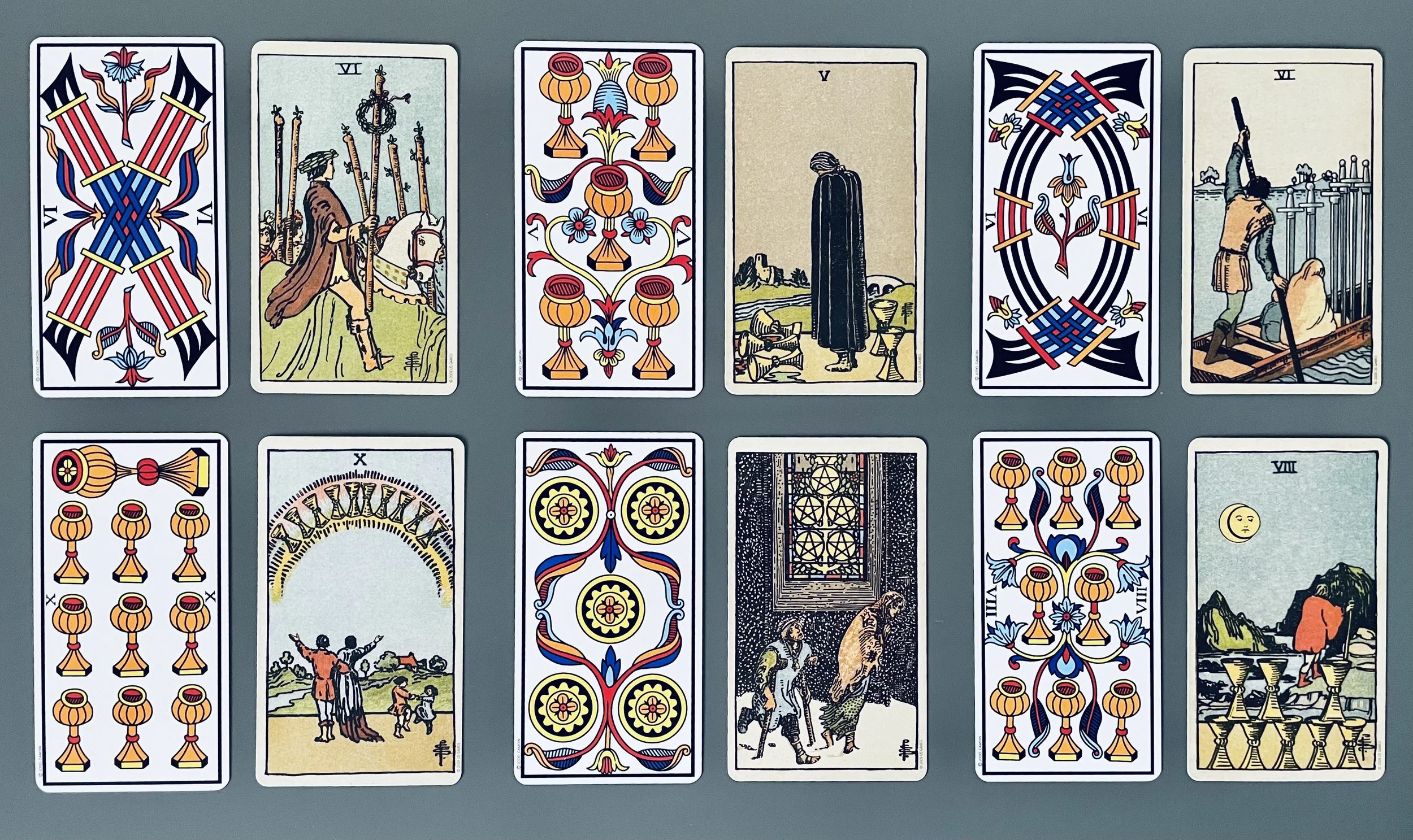
Six numbered suit cards from a modern reproduction of the Tarot de Marseille (left in each pair) alongside their Rider–Waite–Smith counterparts (right), illustrating how Pamela Colman Smith, in collaboration with Arthur Edward Waite, incorporated traditional suit symbols into pictorial scenes of human experience, thereby expanding the cards' perceptual and interpretive horizons.
The historical development of occult Tarot raises an intriguing possibility: that the psychological and interpretive potential of Tarot imagery, glimpsed perhaps even in its occasional use for character delineation in Renaissance Italy, has been preserved and elaborated through a tradition whose claims about the cards' origins are largely unsupported by historical evidence. The occultists who attributed ancient and mysterious significance to Tarot may have been mistaken about the source of its apparent profundity without necessarily having been mistaken in perceiving something profound about the imagery itself. In other words, we don’t have to throw out the cargo just because the vehicle it rode in on has a questionable history.
The Psychology of Tarot in Psychotherapy
Having established the historical background of Tarot and introduced the particular deck under consideration, let me take a moment to clarify what I am not proposing. Tarot does not replace psychotherapy, clinical judgment, formal diagnosis, or patient self-determination; nor does the patient need to adopt any particular religious, spiritual, or metaphysical beliefs about the cards. As I like to say, Tarot belongs to every religious or spiritual tradition—and none. Its imagery may be approached through a variety of interpretive frameworks, including those that make no appeal to supernatural or transcendent powers.
Random Selection and Cognitive Psychology
One relatively straightforward psychological explanation of how Tarot might “work” in the context of card spreads and their interpretation in psychotherapy begins with random selection, which removes the choice of particular cards from the deliberate control of either therapist or patient and introduces an element of unpredictability into the inquiry. In a structured reading, the therapist and patient—or, more generally, the reader and querent—may agree in advance upon the subject of inquiry and the layout of the cards, whether a simple three-card spread, the traditional ten-card Celtic Cross, or any number of other possibilities. There is no single correct arrangement. What matters is that the positions within the chosen spread are assigned particular meanings or functions before the cards are drawn. One position might represent the present situation, another an underlying influence, and another a possible way forward. Thus, while the interpretive framework is deliberately established, the particular cards that come to occupy its positions are determined by chance. In my psychotherapeutic practice, I generally favor three-card spreads, which provide ample symbolic material for exploration without overwhelming the time available in a standard 50-minute session.
Research suggests that externally generated prompts can facilitate creative thinking by introducing new possibilities for association (Wise & Kenett, 2024). However, randomness alone does not appear to guarantee usefulness. Research on the effects of random stimuli on lateral thinking suggests that their effectiveness may depend, in part, on their relevance to the problem under consideration—that is, on their being sufficiently task-related or “optimally random” (Malthouse et al., 2022, p. 6). Malthouse and colleagues specifically identify Tarot and the I Ching as possible examples of practices whose abstract yet relatable symbolic material may occupy this fertile middle ground between excessive predictability and excessive randomness.
The generativity and usefulness of meaning-making through random selection may depend not only on the relevance of the selected material to the task at hand but also on the character and richness of the material from which the selection is made. In this respect, Tarot has been understood as particularly well suited to meaning-making because its imagery is thought to embody a coherent philosophy of the evolution of human consciousness and a vast symbolic repertoire encompassing the predicaments and possibilities of human experience (Pollack, 2019, p. 273; Rosengarten, 2000, p. 100). It’s worth remembering, too, that creative ideation and meaning-making—whether in relation to artistic pursuits, projects, careers, relationships, moral dilemmas, or personal decisions—are themselves psychological processes. This means that Tarot's psychologically oriented repertoire may be relevant to inquiries of many kinds, but its imagery may be especially conducive to psychological exploration in psychotherapy, where patients are explicitly invited to examine the psychological patterns that shape their experiences of themselves, others, and the world.
The randomness of the selection means that a particular card's psychological relevance need not be immediately apparent. A card may seem unrelated to the matter under inquiry, or even disappointing or unwelcome when it shows up. Yet this kind of apparent incongruence may be the very engine of creative, out-of-the-box thinking. An image that does not readily fit the questioner's existing understanding of a situation may spark associations, questions, and interpretations that would otherwise remain unexplored. The resulting discrepancy may also invite a reconsideration of the assumptions through which the situation was originally viewed or understood. After all, we tend to consult an oracular device such as Tarot in the first place precisely because we recognize that our conscious understanding of ourselves and our circumstances is incomplete.
Depth Psychology: Apperception and Archetypal Encounter
To explore Tarot’s psychotherapeutic potential further, I find it helpful to turn to three psychological processes drawn from the psychological literature on projective techniques, together with three classically Jungian concepts:
Apperception, Projection, and Externalization: three closely related but distinguishable psychological processes relevant to the interpretation of symbolically structured yet sufficiently open-ended visual stimuli such as Tarot card imagery (Blume, 2025, p. 195; Semetsky, 2006, p. 188). Apperception refers to the dynamic, selective process through which an individual organizes and interprets what is perceived, investing experience with meaning in accordance with their characteristic patterns of meaning-making, personal needs, motivations, and affective response (Frank, 1939, pp. 390–392, 402–404; Teglasi, 2010, p. 2). Projection, broadly understood, refers to the influence or expression of an individual's internal psychological organization—including needs, motivations, attitudes, and conflicts—in their perceptions of and responses to external stimuli. Although projection, in its classical psychoanalytic sense, is understood as a defensive mechanism, projection in the broader sense need not be defensive or pathological in nature (Rabin, 1968, pp. 9–11). Externalization, a term sometimes preferred to projection in the context of projective techniques such as the Rorschach inkblot test and Thematic Apperception Test (TAT), refers to the outward expression of aspects of an individual's psychological experience through responses to external stimuli, without necessarily implying defensive repudiation or disavowal (Rabin, 1968, p. 10). Across these processes, the resulting perceptions and interpretations reflect both the individual's characteristic psychological organization and the particular features and interpretive possibilities of the stimulus that elicits them (Holzberg, 1968, pp. 39–40, 43–44; Rabin, 1968, pp. 11–12).
The collective unconscious: psychic contents and structure that all human beings share in common (Jung, 1959/1968, pp. 3–4, 42–43).
Archetypes: underlying, inherited forms, patterns, or tendencies within the psyche that we experience, among their other manifestations, as images of universal human characters, situations, and life passages (Jung, 1959/1968, pp. 37–38, 42–43). Jung (1959/1968, pp. 79–80) likened the archetype to the invisible structural principles governing the formation of a crystal: an underlying regularity capable of producing varied manifestations without losing its essential character. Archetypes are thus inexhaustible in their possible expressions; no single manifestation can fully encompass the underlying pattern.
Synchronicity: the meaningful coincidence of two or more events, often involving a correspondence between an inner psychological state and an external occurrence, connected not by causality but by simultaneity and meaning—what Jung proposed as an acausal connecting principle (Jung, 1960/2010, pp. 25, 69).
A particularly instructive application of these psychological processes can be found in the TAT, introduced by Henry A. Murray and Christiana D. Morgan in 1935. One of the most influential and enduringly popular projective methods in clinical psychology, the TAT has generated an extensive body of clinical and research literature, inspired numerous derivative techniques, and accommodated a variety of theoretical approaches to interpretation (Rabin, 1968, pp. 7–8; Teglasi, 2010, pp. 1–2). The procedure described by Murray consists of presenting an individual with a prescribed series of 20 cards—19 depicting various human situations and one blank card—and inviting them to construct stories about what they see (Murray, 1943, p. 4). The individual is encouraged to describe the events leading up to the depicted situation, what is happening in the present moment, what the characters are thinking and feeling, and how the story ultimately unfolds (Murray, 1943, pp. 5–6).
Murray proposed that the narratives elicited by the TAT could reveal important aspects of personality, including dominant drives, emotions, sentiments, complexes, and conflicts, with particular value in bringing to light inhibited tendencies that individuals may be unwilling or unable to acknowledge consciously (Murray, 1943, p. 3). He grounded this possibility in two psychological tendencies: the inclination to interpret ambiguous human situations in accordance with past experiences and present wants, and the tendency to draw upon one's experiences and express conscious or unconscious sentiments and needs when constructing stories (Murray, 1943, p. 3). Murray further observed that pictures are especially effective in stimulating the imagination and inviting individuals to respond, in their own distinctive ways, to recognizable or “classical human situations” (Murray, 1943, p. 4).
Tarot offers a comparable, though historically and symbolically distinct, encounter: its imagery presents recognizable human predicaments within an inherited repertoire of symbolic meanings. In both cases, the individual encounters something neither entirely unfamiliar nor entirely self-generated. The psychological significance of the encounter may emerge precisely through the interaction between the relatively stable features of the stimulus and the individual's characteristic ways of perceiving, interpreting, and responding to it. Research involving projective pictorial stimuli suggests that images combining sufficiently definite representational content with interpretive openness may be particularly conducive to “revealingness,” a term used by Rosenwald (1968, p. 211) to describe the capacity of a stimulus to elicit individually expressive or idiosyncratic meanings (see also Holzberg, 1968, pp. 43–44). In this respect, the Rider–Waite–Smith Tarot's recognizable symbolic structure may be an asset rather than an impediment to apperception: its images present sufficiently definite characters, situations, and actions to engage the imagination, while remaining open enough to interpretation for personally meaningful material to find expression.
Taken together, apperception, projection, and externalization offer a psychological framework for understanding what may happen when randomly selected Tarot imagery enters a psychological inquiry. Not unlike TAT plates, Tarot card imagery invites apperception: the selective perception, organization, and interpretation of experience in accordance with the perceiver’s characteristic patterns of meaning-making, personal needs, and affective response (Blume, 2025, p. 195; Semetsky, 2006, p. 188). Through projection, personal needs, motivations, attitudes, and conflicts may influence the meanings perceived in the imagery; through externalization, aspects of psychological experience may find outward expression in the interpretations and narratives that emerge (Rabin, 1968, pp. 9–11; Semetsky, 2006, pp. 188–190).
The patient's interpretations of Tarot imagery may, in turn, become objects of psychological inquiry in their own right (Semetsky, 2006, p. 190). Much as a clinician interprets a patient's apperceptions of TAT plates to gain insight into the patient's psychological functioning, a psychotherapist may explore the psychological significance of a patient's apperceptions of Tarot imagery. In Tarot-assisted psychotherapy, however, this interpretive process can be explicitly collaborative, with patient and therapist examining the meanings that emerge together. The therapist may attend not only to what the patient perceives in a particular image, but also to how the patient perceives and interprets it, considering whether the meanings attributed to the image reflect characteristic patterns of perception, personal needs, expectations, or conflicts. The therapist's own interpretations, although themselves susceptible to bias arising from theoretical commitments, personal experience, and participation in the therapeutic relationship (Holzberg, 1968, pp. 33–34; Murray, 1943, p. 8), may introduce additional perspectives through which the patient can examine these patterns. In this way, the therapeutic encounter becomes a collaborative inquiry into the processes of meaning-making themselves, potentially bringing previously unrecognized aspects of the patient's psychological organization into conscious awareness.
Yet an encounter with Tarot imagery may reveal more than preexisting perceptual patterns rooted in past experience. If the collective unconscious contains archetypal forms shared across human psychological life, Tarot's images may provide pictorial representations through which those forms become recognizable. Jung himself commented only briefly on Tarot (Greer, 2019, pp. xii–xiii; Rosengarten, 2000, p. 71), but in discussing pictorial representations of the symbolic process, he suggested that “the set of pictures in the Tarot cards” might be “distantly descended from the archetypes of transformation”—“a view that has been confirmed for me,” he added (Jung, 1959/1968, p. 38).
Rosengarten (2000), a clinical psychologist who integrates Tarot into his practice, describes an ineffable “‘feeling experience’” (p. 99) associated with Tarot cards, which he characterizes as an “inherent ‘meaningfulness’ emanating from their own side” (p. 99). He connects this apparent meaningfulness to the cards’ “archetypal nature” (p. 100). In my own experience, certain Tarot images, particularly those of the Major Arcana, similarly evoke the impression that they possess a definite but concealed significance—a meaning awaiting discovery rather than invention. Curiously, I do not generally experience TAT illustrations this way, even when they evoke personally consequential or archetypally recognizable themes. Rosengarten’s explanation may therefore be incomplete rather than mistaken.
If archetypal resonance is not exclusive to Tarot, as my own experience attests, what additional properties of its imagery might account for this distinctive impression of concealed intelligibility?
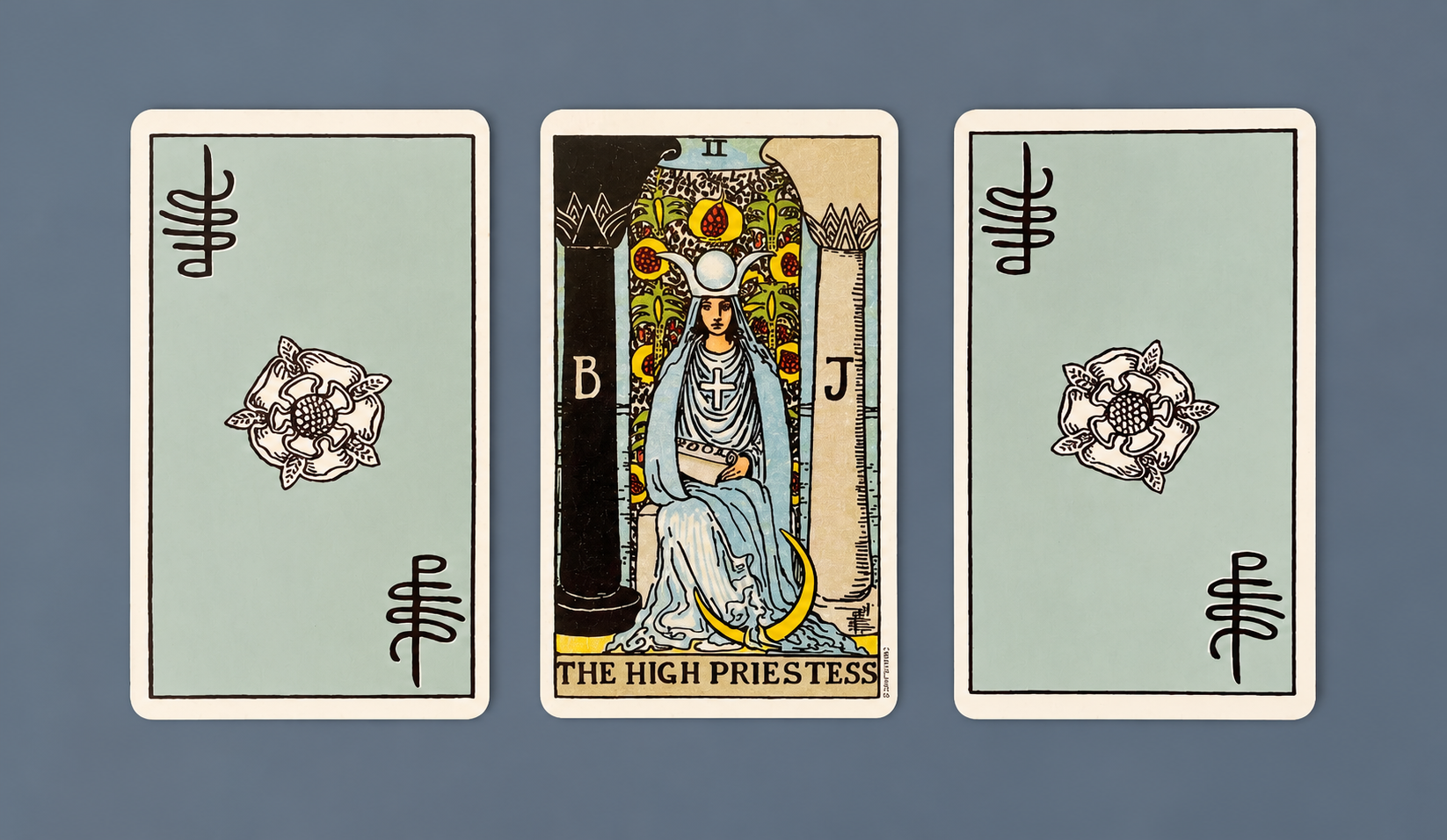
The High Priestess (II), as represented in the Centennial Edition of the Smith-Waite Tarot deck published by U.S. Games Systems.
Two further characteristics of Tarot imagery may contribute to this impression of concealed intelligibility: symbolic density and symbolic coherence. Symbolic density refers to the concentration of potentially meaningful elements within an image, while symbolic coherence refers to the extent to which those elements are meaningfully related to one another, collectively contributing to a recognizable and self-consistent archetypal theme, situation, portrait, or identity. Tarot imagery, especially that of the Major Arcana, often exhibits both qualities, presenting elaborate compositions in which multiple symbolic elements interact to suggest meanings beyond their immediately recognizable representational content. Consider the High Priestess, seated between two contrasting pillars, a veil adorned with pomegranates concealing the sea behind her, a partially concealed scroll in her lap, and a crescent moon at her feet. Her flowing robes cascade like water, seeming to merge with the waters beyond the veil. These elements do not merely accumulate as an assortment of symbols; together with her stillness and enigmatic expression, they compose a mysterious psychological portrait of knowledge withheld, of depths intimated but not disclosed, inviting the impression that something significant lies beyond what has been revealed. Yet density alone does not guarantee coherence. An image could contain dozens of symbols without organizing them around a compelling psychological theme or archetypal identity; conversely, a comparatively spare image might convey an extraordinarily vivid archetypal identity.
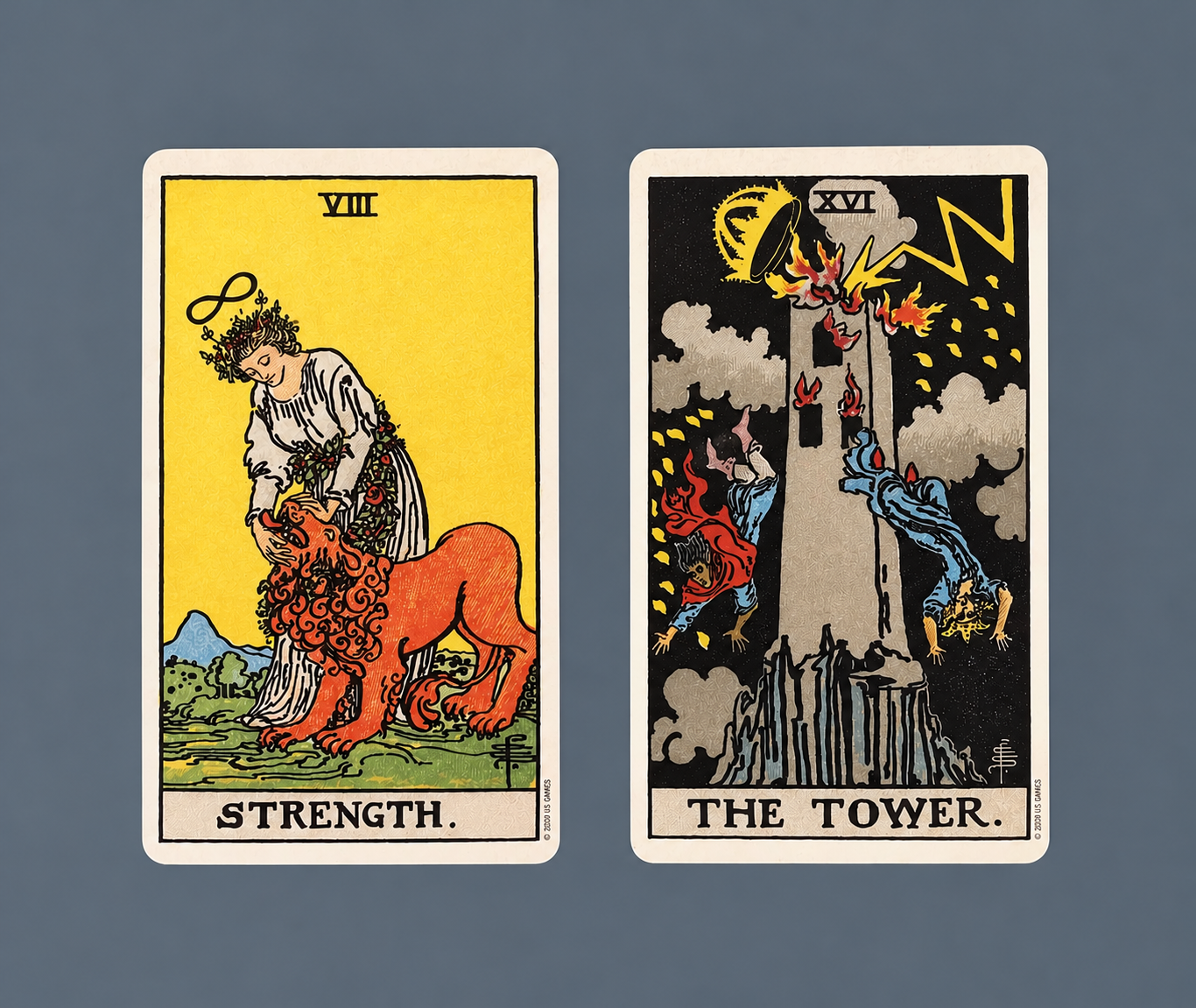
Strength (VIII) and the Tower (XVI), as represented in the Centennial Edition of the Smith-Waite Tarot deck published by U.S. Games Systems.
Many Tarot figures, particularly those of the Major Arcana, do not merely occupy suggestive situations or serve as passive focal points for a field of arbitrary symbols surrounding them. Rather, they themselves personify recognizable patterns of human experience. The success of this archetypal personification depends not simply upon the density of symbolic elements but upon their coherence with the archetypal identity being embodied. Through the convergence of symbolic attributes, bearing, gesture, and expression, these figures acquire a distinctive and psychologically potent characterfulness, giving the impression that their identities and imagery embody meanings awaiting discovery rather than simply inviting meanings to be supplied. Other Tarot images achieve a comparable coherence through archetypal dramatization, depicting recognizable patterns of human experience through relationships, situations, or events rather than principally through the identities of individual figures. The Tower, for example, dramatizes the sudden destruction of an established order through its lightning-struck structure and falling figures, while Strength portrays a gentler psychological drama in which a composed woman handles the jaws of a lion, suggesting a relationship between conscious intention and instinctual forces characterized by engagement rather than domination. Think of it as Tarot’s own retelling of Beauty and the Beast. In both cases, the psychological significance of the imagery emerges not merely from its highly concentrated, individual symbolic elements but from the coherent relationships among them.
The symbolic density and coherence of Tarot may be further elaborated when multiple cards are brought together in a deliberately assembled arrangement or randomly selected spread. Their juxtaposition creates additional possibilities for meaning as the symbols and themes of individual cards reinforce, complicate, or transform one another, inviting the construction of larger psychological narratives.
The inherited meanings of Tarot cards may contribute another dimension to this encounter, whether the cards are selected randomly or deliberately. The historical transmission of these meanings has also helped shape the imagery itself, although conscious familiarity with the interpretive tradition need not be a prerequisite for experiencing the images as psychologically potent. The inherited tradition may thus contribute to both the symbolic material encountered and the interpretive possibilities subsequently brought to bear upon it. From a psychotherapeutic perspective, those inherited meanings may introduce interpretive possibilities that neither patient nor therapist would otherwise have considered. Rather than serving as authoritative explanations, they can become additional perspectives against which personal associations and clinical interpretations are explored (Pollack, 2019, pp. 273–274). A discrepancy between a patient's immediate understanding of a card and its inherited symbolism may itself provide an opportunity for reflection.
The psychological processes and interpretive possibilities described above need not depend upon another interpreter or the random selection of Tarot cards. When cards are deliberately selected for contemplation, apperception, projection, and externalization may influence both the choice of imagery and its subsequent interpretation, while the imagery’s archetypal resonance and inherited meanings may offer perspectives beyond those initially supplied by the individual. Random selection introduces unpredictability and the absence of deliberate choice, but is not a prerequisite for meaningful psychological engagement with Tarot imagery.
Here we arrive at a paradox: Tarot imagery appears to invite meanings through apperception, projection, and externalization while simultaneously suggesting that meanings await discovery. From a Jungian perspective, this apparent contradiction may be resolved through the inexhaustibility of archetypal expression. Archetypal imagery offers neither an empty surface for projection nor discrete packages of predetermined meaning waiting to be unwrapped. Its symbolic possibilities exceed any particular interpretation, and meaning emerges through the encounter between the image and the perceiver. The symbolic image may thus serve as a bridge between the perceiver's personal world of meaning and the inexhaustible possibilities of archetypal experience.
The therapeutic potential of Tarot may lie partly in this meeting of the personal and the archetypal: enigmatic symbolic imagery may draw out existing patterns of perception and meaning-making while also introducing possibilities that challenge or exceed those patterns, potentially unsettling established psychological defenses and making previously inaccessible ways of experiencing oneself and one's circumstances available for conscious consideration (Semetsky, 2006, p. 190). In this way, broadly recognizable patterns of human experience and intensely personal meanings can meet and commingle in a potentially alchemical and transformative process.
On Synchronicity
Sometimes a card appears immediately and astonishingly well matched to the matter under inquiry. Alternatively, a card that initially seems incongruous may become strikingly pertinent as previously unrecognized aspects of the psychological situation emerge into consciousness. What appeared irrelevant to the question as originally understood may acquire significance in relation to a fuller understanding of the situation. It is against this background that the Jungian concept of synchronicity becomes especially interesting. Synchronicity describes the more mysterious possibility that the correspondence between an inner psychological condition and an external event may reflect a meaningful relationship not adequately explained by ordinary causal connections. Randomization, by removing deliberate conscious direction from the selection of symbolic material, may create conditions favorable to synchronicity (Pollack, 2019, pp. 270–272). (Here, I am reminded of the earlier phrase “optimally random,” which, after all, ain’t a particularly bad way to describe the curious conjunction of unpredictability and meaningfulness at the heart of synchronicity. The resemblance suggests an intriguing, if analogical, point of convergence between more psychologically straightforward and depth-psychological accounts of Tarot.) On this understanding, randomness and meaningful correspondence need not be opposing principles. They may be intimately related. Whether randomization actually permits an acausal ordering principle to operate, makes meaningful correspondences more conspicuous to consciousness, or simply creates especially fertile conditions for psychological meaning-making remains an open question. My own view, informed by my studies of astrology, inclines toward the possibility that synchronicity is an ever-present cosmic principle that may become particularly “florid” or “showy” under conditions of deliberate randomization.
At this point, you might reasonably ask: “Didn't he say that Tarot-assisted psychotherapy doesn't require any particular metaphysical beliefs? Why, then, introduce synchronicity?” Fair question. I include synchronicity not to insist upon an ontological claim, but because apperception and archetypal encounter alone do not seem to account fully for my experience of the uncanny correspondences that can arise in Tarot practice. My work with Tarot has consistently produced instances in which the particular images encountered seem strikingly well matched to the matters under inquiry, whether the correspondence became apparent immediately upon turning over a card or only after a period of contemplation. One of the most astonishing possibilities these experiences invite me to contemplate is that the collective unconscious somehow participates in external reality—that nature itself is “ensouled,” replete with both an inner, subjective dimension and an outer, objective one (see Tarnas, 2007, p. 86, for a related argument from astrology). I do not claim to know precisely or definitively why such correspondences seem to occur, but neither do I wish to foreclose possibilities that remain, for me, genuinely mysterious. A patient, however, need not share my uncertainty—or my wonder—about why a particular card appears when it does in order for us to explore what happens when it does.
Three Questions, Three Cards
In setting out to explore the therapeutic benefits of Tarot using the cards themselves, I settled on three questions that pertain to issues at the heart of my understanding and practice of psychotherapy, regardless of whether Tarot is involved.
How does Tarot specifically support the consenting patient in loosening historical, characterological defenses?
How does Tarot specifically support the consenting patient in cultivating an attitude of self-compassion?
How does Tarot specifically support the consenting patient in summoning the courage and will to leave familiar but stultifying ways of living in pursuit of something more meaningful?
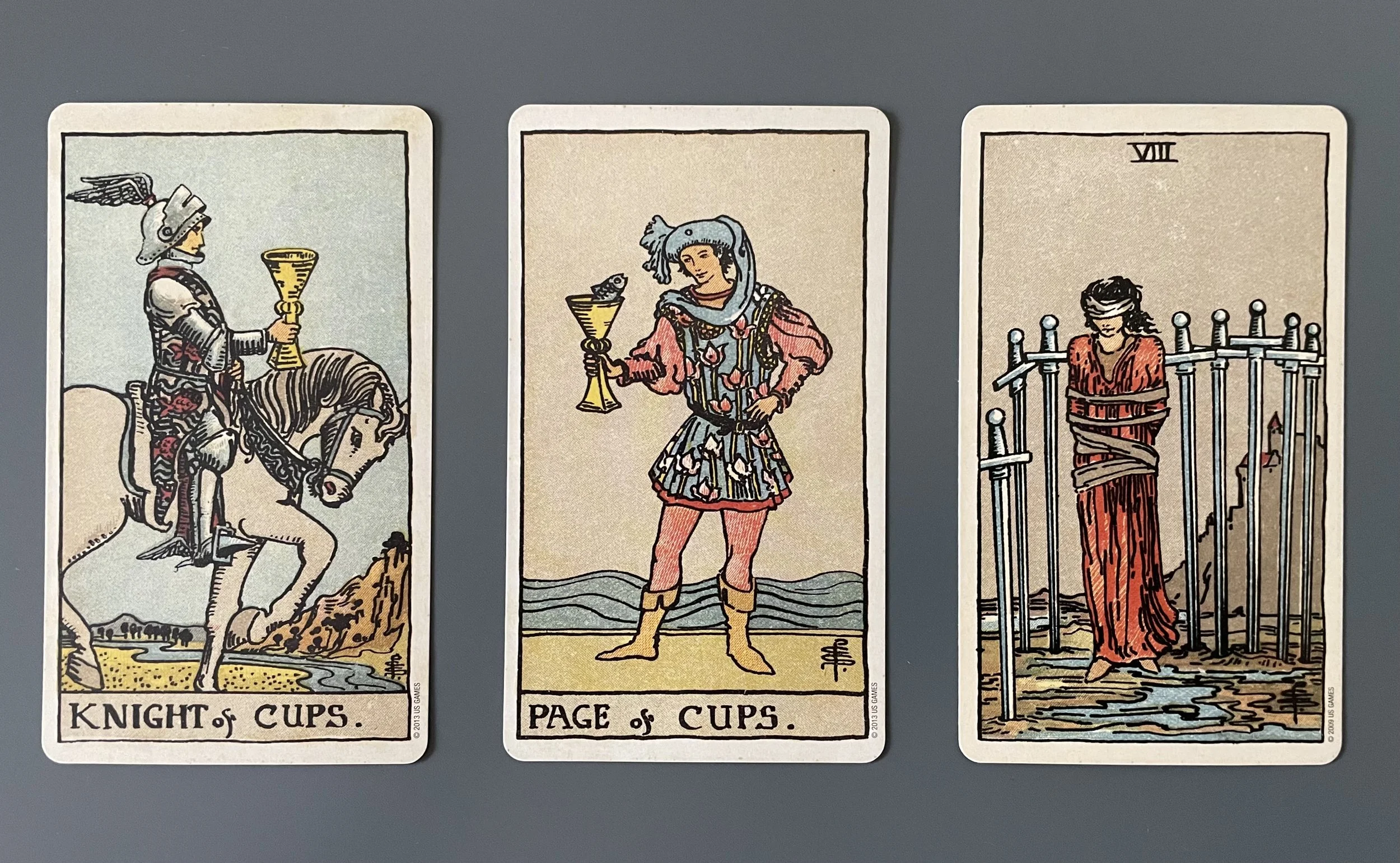
After shuffling and cutting the deck a few times in my customary way, I pulled three cards from the top of the deck—one for each question listed above. When the third card was turned over, this was the spread staring back at me:
Knight of Cups
Page of Cups
Eight of Swords
Knight of Cups: Venturing Behind Our Defenses
For your reference, the Knight of Cups appeared in response to our first question:
How does Tarot specifically support the consenting patient in loosening historical, characterological defenses?
In exploring the meaning of a Tarot card that serves as a response to a question about loosening historical, characterological defenses, it would be useful to define the term. Simply put, psychological defenses are psychic operations (think: redistributions of psychic energy, re-categorizations of psychic meaning) that largely function outside of awareness and arise in response to the individual’s legitimate need to fortify and streamline the developing ego (the subjective sense of “I” or “me”) in the face of its enormous task of processing ceaseless demands arising from both internal and external reality. Regardless of the specific psychic operation under consideration, the purpose of psychological defenses is typically twofold: avoidance or regulation of intense, distressing feelings (e.g., anxiety, shame, grief) and preservation of self-esteem. While not inherently pathological, psychological defenses can give rise to psychological suffering when they are relied upon too heavily or too little, or applied too rigidly (McWilliams, 2011, pp. 100–102).
Let us now venture forth—like the Knight of Cups here—into the strange and wondrous world of the cards themselves.
A Tarot knight, regardless of his particular suit, represents the principles of action, movement, quest, adventure, participation, involvement, and other forms of goal-directed activity. He rides bravely and often eagerly into the terrain symbolized by his suit, equipped with the assets of his suit—and, by the same token, saddled with its liabilities—in an attempt to meet its demands, overcome its rigors, claim its prizes, and otherwise test his mettle. Here, of course, we are specifically considering the Knight of Cups. The suit of Cups, which maps onto the classical element of water, corresponds to the human experiential field (and related faculties) of emotional receptivity, imagination, dreams, memory, innermost psychic life, and unconscious processes. Taken altogether, the Knight of Cups is a romantic character who advances into—or out from within—the realm of emotional, imaginal, and psychic life.
A knight is also a figure who valiantly protects and escorts. As a response to the spread’s first question—about how Tarot specifically supports psychotherapy patients in loosening their psychological defenses—the Knight of Cups in this position would suggest that Tarot practices themselves somehow protect and “escort” patients as they advance, little by little, into the “Cups” terrain of emotional truths hidden behind psychological defenses.
It is fascinating in a paradoxical way that the card drawn in connection with our question about loosening psychological defenses should depict a conspicuously armored figure. This suggests that Tarot practices in psychotherapy facilitate the advance into the innermost core of emotional and psychic life without first requiring patients to drop their own “armor.” To my way of thinking, this has to do with the way Tarot’s archetypal imagery provides a buffering layer of metaphor, permitting patients to explore emotionally and psychologically significant material without dealing directly with personal or autobiographical material whose emotional charge might otherwise prove prohibitive (Blume, 2025, pp. 73, 121). Patients can instead explore such material through the meanings they apperceive in, and the stories they narrate about, archetypal characters participating in universal human dramas (Blume, 2025, pp. 195–196; Semetsky, 2006, pp. 189–190). In other words, symbolic mediation may allow exploration to begin while psychological protection remains available.
In summary, Tarot may facilitate an adventure into the innermost emotional and psychic territory from which our defenses arose without requiring us to become defenseless first. Through archetypal imagery, metaphor, and storytelling, deeply personal psychological material can initially be encountered at a tolerable symbolic distance—as part of a larger human drama—potentially allowing patients gradually to recognize their own stories and loosen the defenses surrounding them.
Page of Cups: Permission to Be a Student of Self
For your reference, the Page of Cups appeared in response to our second question:
How does Tarot specifically support the consenting patient in cultivating an attitude of self-compassion?
As the most junior member of the Tarot “court” (which also includes king, queen, and knight) in each of the four minor suits, a Tarot page represents the archetypal beginner, novice, pupil, apprentice, or messenger. With childlike curiosity and wide-eyed wonderment, he approaches the curriculum of the domain belonging to his corresponding suit under conditions of blessed freedom from demands, expectations, or pressure to perform. Here, of course, we are specifically considering the Page of Cups. As we encountered previously, the suit of Cups corresponds to elemental water and the human experiential field of emotional receptivity, imagination, dreams, memory, innermost psychic life, and the unconscious. Altogether, then, the Page of Cups is a dreamy and romantic young learner who has enrolled in the “school” of emotional, imaginal, and psychological life. In this respect, the Page of Cups grants us permission to become students of our own inner lives.
The card’s imagery suggests that turning toward the inner life with a page’s attitude of gentle curiosity, innocent wonder, and breathless discovery produces a surprising result: something unbidden rises spontaneously from the cup of our inner being to meet us with a similarly gentle curiosity of its own. Through the page’s characteristically benign and patient approach, an unlikely relationship becomes possible. As a creature that belongs to the cool depths, the visiting fish may represent the latent—but no less vital—aspects of self that exist in the uncharted aquatic zones beyond the island of day-to-day ego consciousness. The conscious personality turns toward the depths with curiosity, and something from the depths appears to turn toward consciousness in return. The image thereby becomes one of relationship with the psyche rather than conquest, extraction, or mastery.
There is a peculiar hazard in the course of undergoing psychotherapy, especially for patients with compliant or perfectionistic streaks. The insights that emerge in therapy may be automatically construed, in a perverse reversal, as evidence of a prior failure to know oneself at depth. The achievement of insight gets retroactively converted into proof of deficiency: If I can see this now, I should have seen it before. Moreover, insight into cognitive, emotional, behavioral, or relational patterns can become an indictment of character: Why am I like this? How weak or stupid I must be to have thought, felt, behaved, or related this way! The very insights that promise to loosen lifelong, constricting patterns of self-limitation and self-attack are instead recruited and repurposed as their newest imprisoning technology. Whenever we find ourselves in this predicament, the Page of Cups comes to our aid with his implicit permission to receive an education in our inner lives without declaring ourselves failures for needing one in the first place.
But what does the appearance of this particular card suggest about how the inclusion of Tarot practices in psychotherapy might specifically promote a self-compassionate attitude? The answer may have to do with the profound ambiguity and inexhaustible mystery of Tarot's archetypal images, which, like the fish rising out of the page's cup, are riddles to ponder and presences with which to deepen relationship—not conditions to optimize, problems to master, or facts to memorize (Rosengarten, 2000, pp. 99–100). The Page of Cups is apt as a response to our second question because, at the most basic level of description, the card depicts a figure marveling unhurriedly at an unexpected image or form. In this respect, the fish is a stand-in for each and every card in the Tarot deck. Thus, Tarot practices in psychotherapy may promote self-compassion by routinely presenting us with talismanic images that invite contemplation while resisting final interpretation. Indeed, it would be absurd to suggest that the Page should “solve,” “optimize,” “master,” or “complete” his fish. No, only ongoing contemplation and relationship make sense.
The ultimate indeterminacy of Tarot has as much to do with the nature of the images themselves as it does with the nature of the psyche beholding them. The consciousness that encounters a Tarot image is itself ever-changing because it remains in dynamic relationship with an unconscious that can never be exhaustively assimilated. As Jung (1959/1968, pp. 287–288) writes:
The psyche consists of two incongruous halves which together should form a whole. One is inclined to think that ego-consciousness is capable of assimilating the unconscious, at least one hopes that such a solution is possible. But unfortunately the unconscious really is unconscious; in other words, it is unknown. And how can you assimilate something unknown? Even if you can form a fairly complete picture of the anima and animus [two key archetypes in Jung’s analytical psychology], this does not mean that you have plumbed the depths of the unconscious. . . . But if we understand anything of the unconscious, we know that it cannot be swallowed.
As previously unconscious aspects of self become available to awareness, new meanings may become available in an image encountered before (Murray, 1943, p. 21; Teglasi, 2010, p. 26). Therefore, even when the same person encounters the same image, the relationship cannot simply be repeated: each interpretive event arises anew from the meeting of an image rich in symbolic possibilities and an ever-changing psyche. And just as the psyche cannot finally be plumbed, neither can the archetypal image be reduced to a final meaning—not because the image itself is limitless, but because the archetypal patterns it evokes possess a wealth of possible meanings that no single interpretation can exhaust. Making a point that could apply to the fish in the Page’s cup no less than to the card’s imagery as a whole, Jung (1959/1968, p. 38) writes:
The ground principles, the archai, of the unconscious are indescribable because of their wealth of reference, although in themselves recognizable. The discriminating intellect naturally keeps on trying to establish their singleness of meaning and thus misses the essential point; for what we can above all establish as the one thing consistent with their nature is their manifold meaning, their almost limitless wealth of reference, which makes any unilateral formulation impossible.
We are perpetual students of ourselves not because we have failed to achieve sufficient self-knowledge, but because the psyche is constituted such that complete self-knowledge is impossible. The Page’s beginnerhood isn’t remedial. It’s permanent. Tarot may cultivate self-compassion by repeatedly placing us in the position of the Page of Cups: ever-changing learners before an inexhaustible mystery. Its irreducibly ambiguous archetypal imagery may habituate us to curiosity, wonder, and not-knowing. By repeatedly confronting us with images that resist final mastery, Tarot may help us rehearse a receptive, compassionate stance that we can then bring to ourselves. The tribunal that would retroactively prosecute the supposed crime of failure to know ourselves in advance can then begin to crumble. Psychological insight becomes an occasion for discovery rather than retroactive self-condemnation.
Eight of Swords: Prisoner and Jailer Are One
For your reference, the Eight of Swords appeared in response to our third and final question:
How does Tarot specifically support the consenting patient in summoning the courage and will to leave familiar but stultifying ways of living in pursuit of something more meaningful?
The card itself depicts a red-garmented, blindfolded, and partially bound feminine figure standing in a mudflat beneath a gray sky. Eight swords rise from the ground on either side of her. A castle or fort looms ominously behind her. The image evokes themes of entrapment, imprisonment, debasement, and humiliation. The mood is eerie, oppressive, desolate.
And yet…
On closer inspection, the apparent prison begins to reveal some peculiarities. While the woman’s arms and torso are indeed bound, her legs and feet remain unfettered. Despite the binding of her upper body, she remains ambulatory. While the swords around her create the impression of a jail cell, they do not obstruct her movement. The way out may be mucky and unpleasant, but is in no way blocked. Finally, the absence of a guard or warden is conspicuous. No external authority appears to prevent the woman from leaving this uncomfortable and humiliating scene.
Why, then, does she stay?
The reason may come down to the woman’s blindfold. Because of it, she is ignorant not just of the amount of freedom she still possesses to change her situation but of the nature of her situation in general. The woman cannot see her predicament—including the avenues still open to her for escape—and thus she believes that she is ineluctably imprisoned. But, crucially, she is unaware that she “believes” it. From her subjective standpoint, her imprisonment is no belief, but reality itself. In this way, the most perniciously binding aspect of her situation—more ensnaring than any physical barrier or restraint could be—is her doubly unconscious belief in her imprisonment. In other words, she does not know that she does not know she is free (although not totally unencumbered) to depart the scene. She doesn’t merely believe something false; she doesn’t know that what organizes her experience of possibility is a belief at all. This is why no guard or warden need trouble himself to ensure her continued confinement. The absent warden can afford to be absent because the prisoner, unable to recognize the contingency of her imprisonment, has internalized his function. The woman effectively serves as simultaneous prisoner and jailer.
In exploring the meaning of a Tarot card that speaks so vividly to the experience of psychological entrapment, it would be useful to introduce another clinically relevant concept: pathogenic beliefs. Formed in early childhood and typically operating outside of awareness, pathogenic beliefs are emotionally charged, behaviorally organizing cognitive structures with a characteristic shape: they warn that the pursuit of an ordinarily healthy developmental goal (e.g., autonomy, pleasure, curiosity, emotional care, individual self-expression, competence, reciprocal relationship, intimacy and eroticism, independent belief formation, success) is fraught with risk of harm to ourselves or to significant others (Silberschatz, 2005, pp. 4–8). This harm is usually understood or experienced as strain or damage to attachment bonds. The individual may unconsciously fear that pursuing such a goal will humiliate a parent or sibling, arouse envy, provoke anger, or otherwise jeopardize an important relationship. For example, a child may come to experience surpassing a family member in some sensitive area, placing demands on someone whose capacities already seem stretched, or consuming finite familial resources (tangible or intangible) as dangerous to the preservation of love (Engel & Ferguson, 2004, pp. 37–52). Much of the work of psychotherapy involves uncovering and disconfirming these grim, self-limiting, but often essentially compassionate beliefs in light of the fact that the circumstances, dependencies, and possibilities of adult life no longer perfectly reproduce those under which the beliefs originally arose.
Like the figure depicted in the Eight of Swords, we generally remain unaware that suffering rooted in pathogenic beliefs originates in a belief (or set of beliefs) that serves to narrow—often severely—the aperture of life experience. From our subjective standpoint, this is just “how things are.” With equal portions of compassion and accountability, the Eight of Swords invites us to question what we know. At first, prisoner and jailer are one sounds grim: Wait, I'm doing this to myself? But once the selfsame identity of prisoner and jailer is recognized, liberation becomes logically possible. If the jailer were wholly external, the prisoner would require someone else's permission to leave. If prisoner and jailer are one, the discovery of one's complicity is simultaneously the discovery of one's agency. By depicting the frightening discovery that some portion of our imprisonment is internally maintained, the Eight of Swords simultaneously reveals that some portion of our freedom is ours to exercise. The courage to depart may begin with the recognition that departure is possible—and that one possesses the power to undertake it.
With this one card alone, Tarot offers a strikingly accurate and compassionate symbolic representation of the predicament created by pathogenic beliefs. Through its pictorial representation of this and other forms of emotional and psychological suffering, Tarot may offer us the beginnings of the sight required to recognize our own predicaments. In conjunction with other necessary therapeutic factors, such recognition may become the beginning of freedom from them. Alongside its images of jubilation, pleasure, fulfillment, and achievement, Tarot externalizes suffering into images that can be looked at. Shame, paralysis, grief, conflict, defensiveness, isolation, dependency, despair—experiences that may otherwise be amorphous or difficult to apprehend—acquire visible form. Once suffering is pictured out there, patient and therapist can look at it together (Rosengarten, 2000, pp. 87–88; Semetsky, 2006, pp. 189, 191).
Conclusion: What Became Possible?
We set out to explore three questions about the potential benefits of using Tarot in psychotherapy through a three-card spread. The cards suggest three possibilities:
Knight of Cups: “I can venture toward what hurts without first becoming defenseless.”
Page of Cups: “I can encounter what I discover there as a learner rather than a failure.”
Eight of Swords: “I can recognize my participation in patterns that constrain me and begin contemplating another choice.”
If we zoom out, we see that none of these cards diagnosed a patient, predicted the future, issued instructions, or supplied incontrovertible truths. Instead, their images facilitated exploration, association, apperception, metaphor, psychological recognition, and meaning-making. In essence, the cards served as symbolic elicitors and amplifiers through which the matters under inquiry could be seen anew.
Of course, the interpretations offered here represent my own engagement with the imagery, not a template for how a therapist ought to interpret Tarot cards on a patient's behalf. In Tarot-assisted psychotherapy, as I practice it, the process is necessarily collaborative. The patient's perceptions, emotional responses, and personal associations provide essential starting points for exploration, while the therapist may contribute observations, questions, or tentative interpretations without claiming authority over what the cards must mean. At times, the image may even introduce something unexpected—a perspective that challenges the patient's habitual understanding of a situation or suggests a psychological possibility not previously considered. The therapeutic value of such an encounter lies not in arriving at a predetermined interpretation, but in what becomes possible for the patient to recognize, experience, and explore.
This brings us back to the question underlying this entire exercise: What becomes possible in the therapeutic encounter when Tarot is available as another way of thinking, seeing, and imagining?
Well, take another look at the cards.
Author’s Note
I wrote and developed this essay with the assistance of ChatGPT, which I used as a collaborative tool for identifying relevant scholarly literature, developing arguments, and assisting with composition and editorial refinement. This involved an iterative process of developing ideas, generating and revising passages, and critically evaluating the resulting arguments and language against the scholarly literature. I independently consulted and evaluated the scholarly sources cited throughout the essay. The essay reflects my own clinical perspective, scholarship, and critical judgment, and I take full responsibility for its contents.
References
Blume, D. (2025). The clinical use of tarot card imagery in psychotherapy: Volume 1.
Decker, R., Depaulis, T., & Dummett, M. (1996). A wicked pack of cards: The origins of the occult tarot. Duckworth.
Decker, R., & Dummett, M. (2025). A history of the occult tarot. September Publishing. (Original work published 2002)
Engel, L. B., & Ferguson, T. (2004). Imaginary crimes: Why we punish ourselves and how to stop. iUniverse.
Farley, H. (2019). A cultural history of tarot: From entertainment to esotericism. Bloomsbury Academic. (Original work published 2009)
Frank, L. K. (1939). Projective methods for the study of personality. The Journal of Psychology, 8(2), 389–413.
https://doi.org/10.1080/00223980.1939.9917671
Greer, M. K. (2019). Foreword. In S. Nichols, Tarot and the archetypal journey: The Jungian path from darkness to light (pp. ix–xiv). Weiser
Books.
Holzberg, J. D. (1968). Psychological theory and projective techniques. In A. I. Rabin (Ed.), Projective techniques in personality
assessment: A modern introduction (pp. 18–63). Springer Science+Business Media.
Jung, C. G. (1968). The archetypes and the collective unconscious (R. F. C. Hull, Trans.; 2nd ed.). Princeton University Press. (Original work
published 1959)
Jung, C. G. (2010). Synchronicity: An acausal connecting principle (R. F. C. Hull, Trans.). Princeton University Press. (Original work
published 1960)
Malthouse, E., Liang, Y., Russell, S., & Hills, T. (2022). The influence of exposure to randomness on lateral thinking in divergent,
convergent, and creative search. Cognition, 218, Article 104937. https://doi.org/10.1016/j.cognition.2021.104937
McWilliams, N. (2011). Psychoanalytic diagnosis: Understanding personality structure in the clinical process (2nd ed.). Guilford Press.
Murray, H. A. (1943). Thematic apperception test manual. Harvard University Press.
Pollack, R. (2019). Seventy-eight degrees of wisdom: A tarot journey to self-awareness. Weiser.
Rabin, A. I. (1968). Projective methods: An historical introduction. In A. I. Rabin (Ed.), Projective techniques in personality assessment: A
modern introduction (pp. 3–17). Springer Science+Business Media.
Rosengarten, A. (2000). Tarot and psychology: Spectrums of possibility. Paragon House.
Rosenwald, G. C. (1968). The Thematic Apperception Test. In A. I. Rabin (Ed.), Projective techniques in personality assessment: A modern
introduction (pp. 172–221). Springer Science+Business Media.
Semetsky, I. (2005). Integrating tarot readings into counselling and psychotherapy. Spirituality and Health International, 6(2), 81–94.
https://doi.org/10.1002/shi.52
Semetsky, I. (2006). Tarot as a projective technique. Spirituality and Health International, 7(4), 187–197. https://doi.org/10.1002/shi.252
Silberschatz, G. (Ed.). (2005). Transformative relationships: The control-mastery theory of psychotherapy. Routledge.
Tarnas, R. (2007). Cosmos and psyche: Intimations of a new world view. Plume.
Teglasi, H. (2010). Essentials of TAT and other storytelling assessments (2nd ed.). Wiley.
Wise, T. A., & Kenett, Y. N. (2024). Sparking creativity: Encouraging creative idea generation through automatically generated word
recommendations. Behavior Research Methods, 56(7), 7939–7962. https://doi.org/10.3758/s13428-024-02463-8